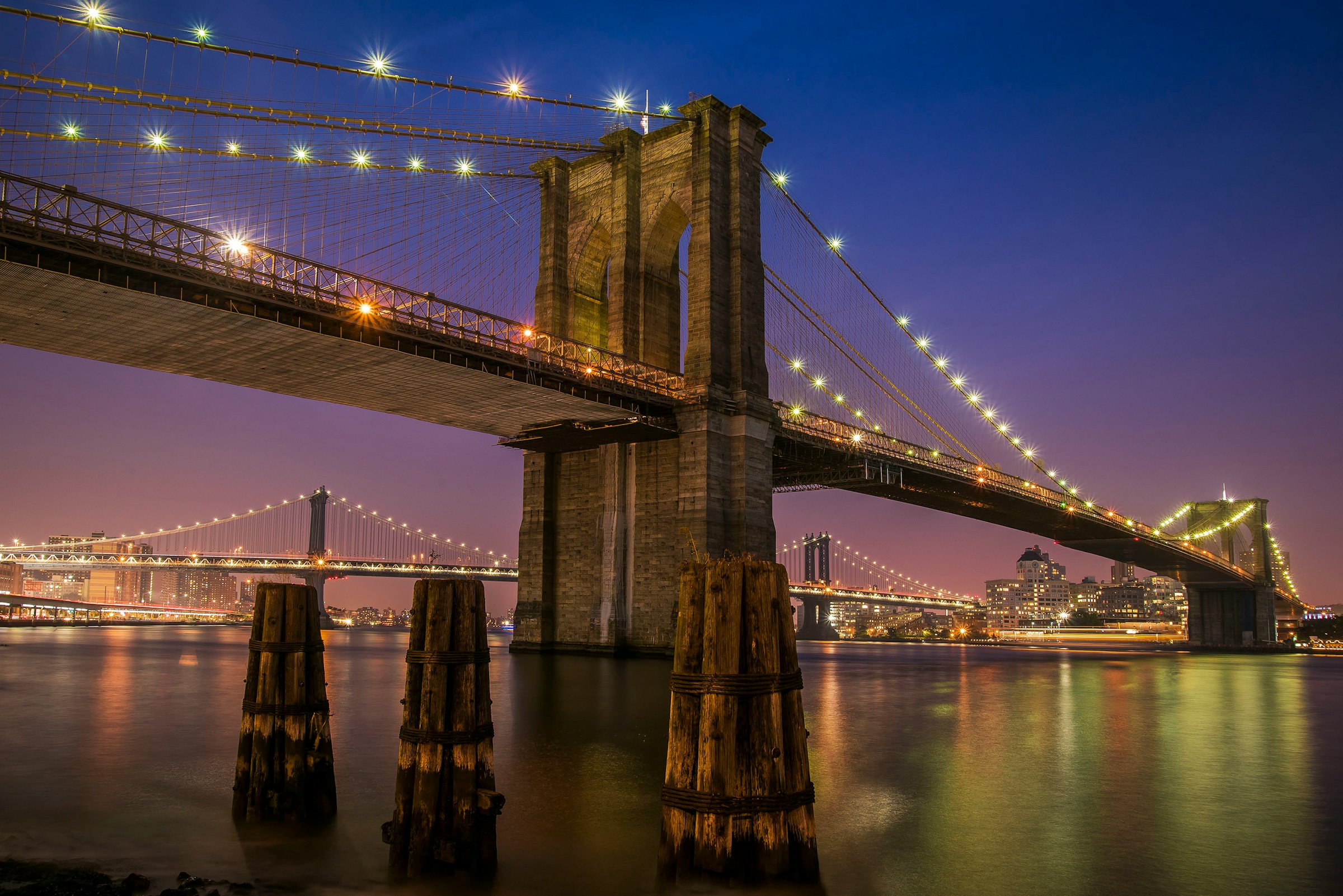
As industrialism and mass culture shaped the broader borough, the affluent neighborhood of Brooklyn Heights evolved into a paramount sanctuary for America's most influential writers and intellectuals. Perched on a bluff overlooking the East River and Manhattan, the Heights combined stunning 19th-century architecture with an atmosphere of bohemian gentility. Architecturally, the neighborhood features pristine examples of early American building styles, such as the series of brick Federal-style homes at 155–159 Willow Street, built in the 1820s. These homes predated the modern grid, and 157 Willow Street even featured an underground tunnel leading to a stable—a space reportedly used to hide runaway slaves escaping northward. Nearby, Grace Court Alley is lined with 19th-century brick stables and carriage houses, complete with protruding metal hooks once used to hoist supplies, which have since been converted into luxurious duplexes.72,52,51

The intellectual lineage of the area dates back to Walt Whitman, widely considered America’s greatest poet, who lived at 99 Ryerson Street in the nearby Clinton Hill neighborhood from May 1855 to April 1856. During his tenure as the editor of the Brooklyn Daily Eagle—a position he was ultimately fired from due to his radical, anti-slavery support for the Wilmot Proviso—Whitman absorbed the polyglot energy of the Brooklyn waterfront. It was from his Ryerson Street home that Whitman finalized the first edition of Leaves of Grass, a seminal text that revolutionized American poetry through its embrace of free verse, egalitarianism, and unvarnished male sexuality. The preservation of Whitman's home has been a highly contentious issue; despite impassioned pleas from preservationists at the Landmarks Preservation Commission, the property, owned by the Horacio Downs Living Trust, has faced opposition to landmarking. The fragility of this history is underscored by the fate of the neighboring house, which the city demolished by hand in 2015 to control asbestos.74,76,75,79

By the mid-20th century, Brooklyn Heights was teeming with literary luminaries, many of whom occupied historic townhouses that served as the literal incubators for masterpieces of American literature.
| Literary Figure | Brooklyn Heights Residence | Key Works / Historical Context |
|---|---|---|
| Truman Capote | 70 Willow Street (1955–1965) | Rented the basement apartment of this 1839 Greek Revival mansion. Wrote Breakfast at Tiffany's and In Cold Blood here. |
| Arthur Miller | 31 Grace Court; 155 Willow Street | Wrote Death of a Salesman at 31 Grace Court in the late 1940s. Later lived at 155 Willow Street, where he authored The Crucible (1953). |
| W.E.B. Du Bois | 31 Grace Court (1951–1961) | Purchased the home from Arthur Miller. Authored the Black Flame trilogy here amid intense McCarthy-era federal persecution before immigrating to Ghana. |
| Carson McCullers, W.H. Auden | 7 Middagh Street | Formed a legendary bohemian intellectual enclave on the cusp of World War II, sharing the residence. |
Sources cited in this chapter
- A Stroll Through Brooklyn Heights - walking tour ↗
- Address - Urban Archive - South of Union Square ↗
- Ask a historian: What writers lived in Brooklyn Heights? ↗
- Address - Urban Archive - South of Union Square ↗
- Whitmanites make surprise appearance at hearing to call for ↗
- OPINION: Walt Whitman, black Brooklyn, Wounded Knee and me ↗
- Address - Urban Archive - South of Union Square ↗
- Brooklyn Heights Video Tour - Part 2 : New York Habitat Blog ↗
- Flatbush + Main : W.E.B. Du Bois in Brooklyn ↗