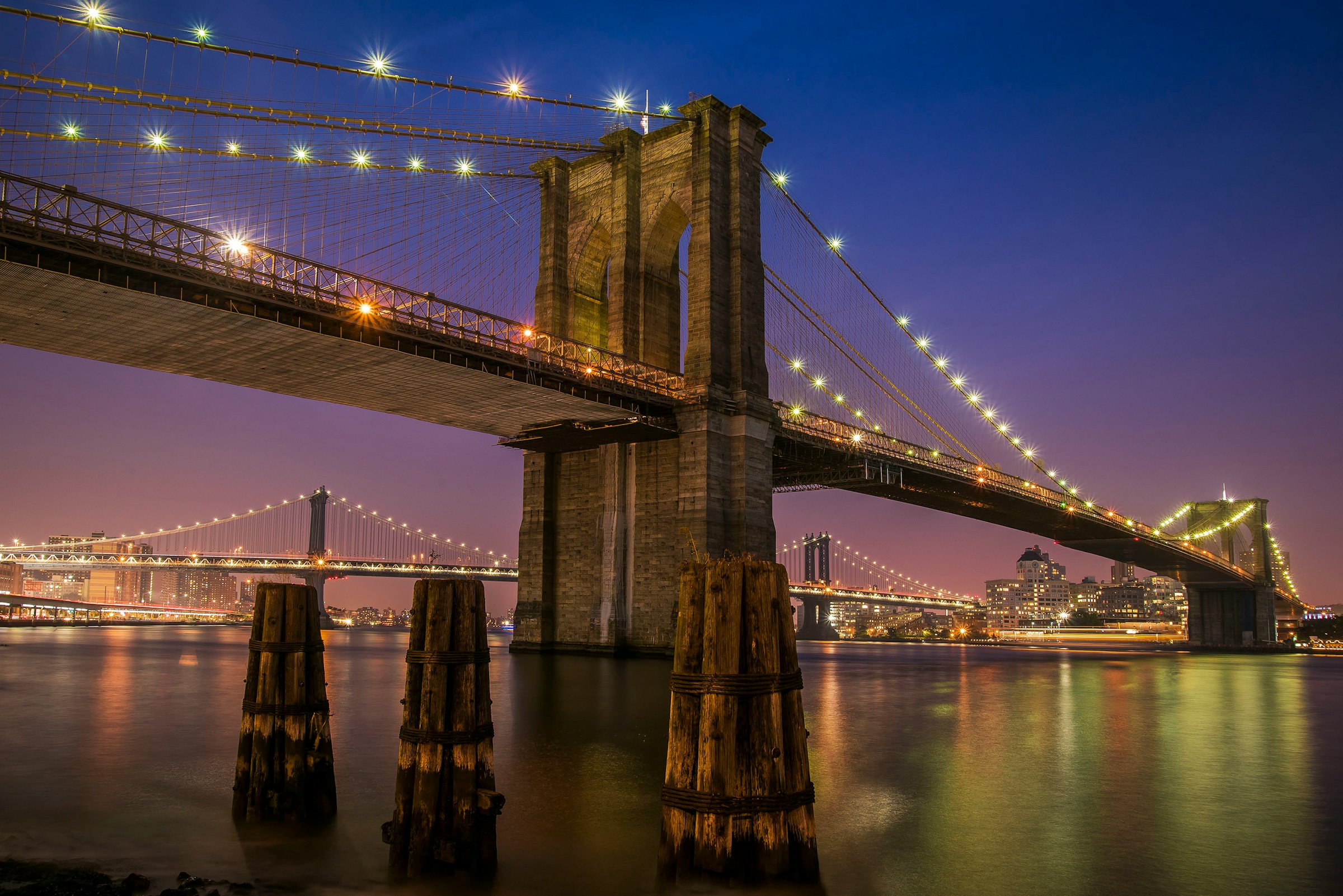
The designated landmarks of Brooklyn are not solely the domains of wealthy industrialists and prominent architects. Some of the borough's most crucial and fragile preservation victories were achieved through fierce grassroots activism focused on saving the specific heritage of marginalized communities and the urban environment.
The Rediscovery and Preservation of Weeksville
- 1838Year Weeksville was founded by James Weeks
- 500residents by the 1850s (over 500)
- $3.9 millionCity allocation in 2024 for restoration of the wooden homes
One of the most profound archaeological and preservation narratives in New York history is the rediscovery of Weeksville. Founded in 1838 by an African American longshoreman named James Weeks—who purchased a plot of land from Henry C. Thompson, another free Black man—Weeksville grew into a thriving, self-sufficient free Black community in the Ninth Ward of central Brooklyn just eleven years after the final abolition of slavery in New York State. By the 1850s, Weeksville boasted over 500 residents, its own churches (including Bethel Tabernacle AME and the Berean Missionary Baptist Church), an orphanage, and Colored School No. 2, which was the first school in the country to integrate both students and staff. Crucially, during the violent New York City Draft Riots of 1863, Weeksville served as a vital safe haven for African Americans fleeing racist mob violence in Manhattan.61,62
As Brooklyn's rigid street grid expanded eastward in the late 19th and early 20th centuries, the old Native American and Dutch paths were systematically paved over. Weeksville was literally swallowed by the advancing city, its cemetery demolished to make way for Eastern Parkway, its wooden homes replaced by continuous brick rowhouses, and its memory almost entirely erased from the civic consciousness.61

In 1968, a local historian named James Hurley and a pilot named Joseph Haynes identified four anomalous, dilapidated wooden houses situated diagonally off the modern grid along Bergen Street. These structures, built between 1840 and 1880, were the absolute last physical remnants of the old Hunterfly Road. Recognizing the existential threat to these structures, community activist Joan Maynard spearheaded a fierce, community-driven preservation campaign, forming the Society for the Preservation of Weeksville and Bedford-Stuyvesant History. Her efforts forced the city to acknowledge the site's immense historical value. In 1970, the Hunterfly Road Houses were declared Individual Landmarks by the LPC, and in 1972, they were placed on the National Register of Historic Places.61,63,62
Today, functioning as the Weeksville Heritage Center, the site stands as one of the few remaining pre-Civil War free Black communities in the nation. It is preserved purely through the tenacity of local advocates, and a recent 2024 allocation of $3.9 million by the city ensures the ongoing structural restoration of the wooden homes. The LPC has also moved to protect other crucial nodes of minority history, such as the designation of the former Colored School No. 3 (Public School 69) in Williamsburg, designated in 1998.62,15
Hattie Carthan and the Magnolia Grandiflora
A similar triumph of grassroots activism occurred in the neighborhood of Bedford-Stuyvesant, centered not on a building, but on a tree. At 679 Lafayette Avenue stands a Magnolia grandiflora (Southern Magnolia), an evergreen species that is extremely rare to find thriving in the harsh winter climate of the Northeast. Planted circa 1885 from a seedling brought from North Carolina, the tree somehow adapted and flourished, growing a straight trunk to a height of over 40 feet.67,69
In the late 1960s, the tree was severely threatened by municipal urban renewal plans that called for the demolition of three adjacent 1880s neo-Grec brownstones (numbers 677, 678, and 679) to construct a parking lot for a new housing development. Hattie Carthan, an African American community leader and environmental activist affectionately known as the "tree lady of Brooklyn," launched a massive fundraising and political campaign to save it. Raising nearly $20,000 through relentless grassroots efforts—including neighborhood block parties and selling barbecue dinners at $1.25 per plate—Carthan forced the city to reconsider.67,69,68
In 1970, recognizing the tree's immense cultural and botanical significance, the LPC took the highly unusual step of designating the Magnolia grandiflora as an Individual Landmark—making it one of only two "living landmarks" in New York City (the other being the now-felled Weeping Beech in Queens). Carthan brilliantly utilized the momentum of the designation to found the Magnolia Tree Earth Center, negotiating the purchase of the three adjacent brownstones to serve as a permanent hub for urban environmental education and beautification.67

Sources cited in this chapter
- Brooklyn-Landmarks | HDC - Historic Districts Council ↗
- Beyond the Village and Back: Historic Weeksville, Brooklyn ↗
- Weeksville Heritage Center - Wikipedia ↗
- Hunterfly Road Houses at Weeksville - Urban Archive ↗
- Magnolia grandiflora (Brooklyn) - Wikipedia ↗
- An African American Tree Activist Lived in Brooklyn ↗
- Magnolia Grandiflora | HDC - Historic Districts Council ↗