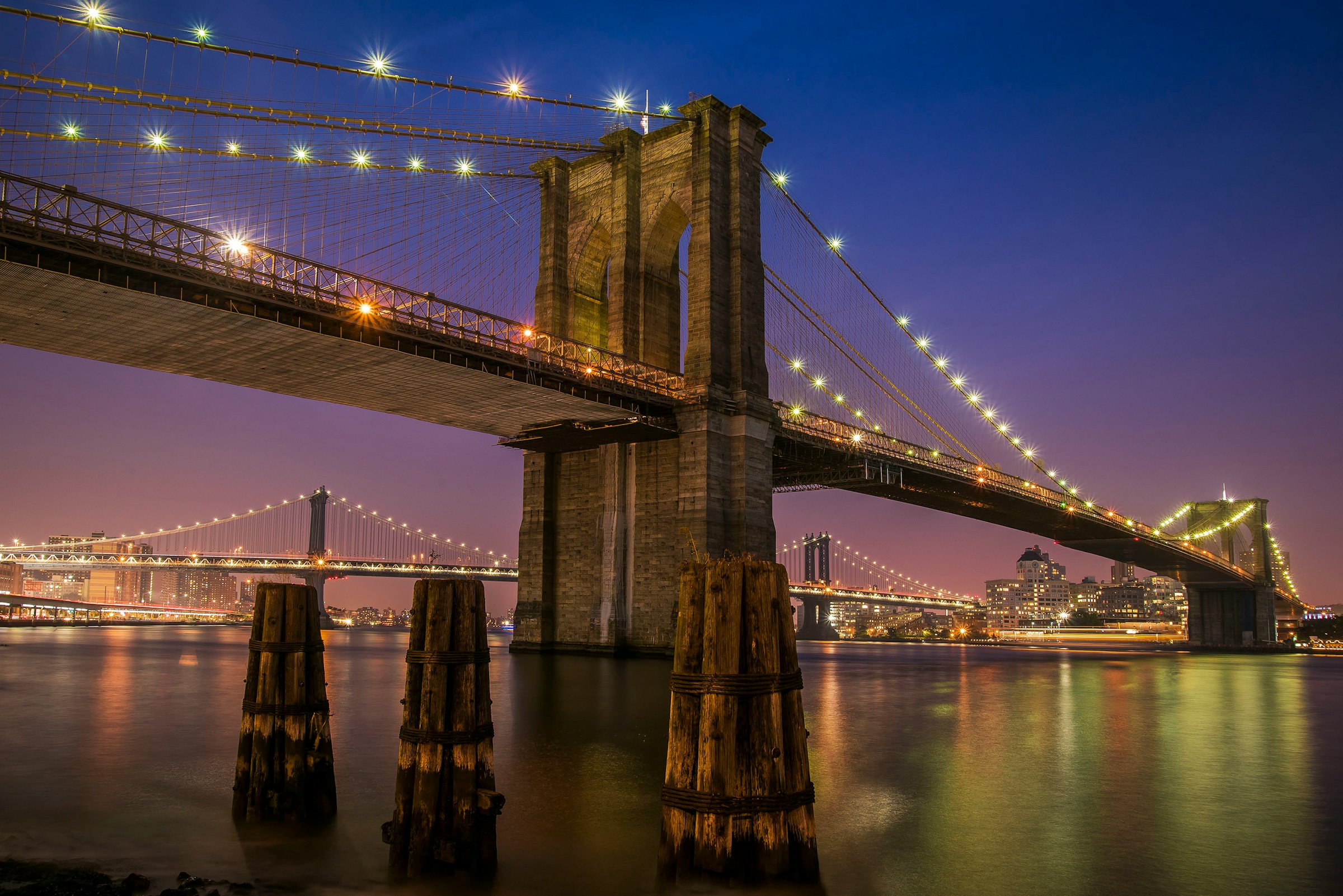
Brooklyn is one of New York City's five boroughs, and finding a home here takes more planning than in many other places. Housing is tight, decisions are made quickly, and the neighbourhood you pick shapes your commute, your daily routine and your budget. This chapter gives you the official benchmarks, a moving timeline, a budget checklist and a neutral comparison of ten neighbourhoods to help you start.
- 1.41%Citywide net rental vacancy rate, 2023 NYC Housing and Vacancy Survey (down from 4.54% in 2021)
- 1.27%Brooklyn net rental vacancy rate, 2023 NYC Housing and Vacancy Survey
- $1,650Brooklyn median monthly rent across all renter-occupied units, 2023 (citywide: $1,641)
- $1,811Citywide median gross rent, 2024 American Community Survey, as reported in April 2026
- 51.6%Share of NYC renter households paying 30% or more of income on rent, 2024 American Community Survey
These figures come from the 2023 New York City Housing and Vacancy Survey, run by the city's housing agency (HPD), and from the Rent Guidelines Board's April 2026 Income and Affordability Study, which uses 2024 Census survey data. Both are the latest versions this guide could confirm as of October 2026; check the publishers' pages for newer releases.1,2,3
What the official numbers tell you
The 2023 survey found the citywide net rental vacancy rate had fallen to 1.41 percent, which HPD described as the lowest since the 1968 survey. In Brooklyn it was 1.27 percent. In practice that means few apartments are available at any one time and competition is strong. HPD also reported that vacancy was below 1 percent for apartments with rents under $2,400 (2023 dollars), so the lowest-priced homes are the hardest to find.1,2
The median rent in the survey is the rent paid by all current renter households in 2023, including long-term tenants and regulated apartments. It is not the price of an apartment listed today, and asking rents for vacant units are usually different from what long-time residents pay. Use the median as a sense of scale, then compare it with current listings. The Rent Guidelines Board's 2026 study found that, citywide, the typical renter household spent about 31 percent of its income on gross rent (2024 data), and about half of renter households spent 30 percent or more.1,3
Budget checklist
Rent is only part of the cost of arriving. The list below covers the items newcomers most often forget. Tick them off as you plan, and work out your move-in total before you apply.
- Monthly rent, and the income you will need to show to qualify (see the Renting chapter)
- Security deposit: by state law it cannot be more than one month's rent
- First month's rent, due at or before lease signing
- Any fees the landlord must disclose in writing under the city's FARE Act, plus a background or credit check fee (capped at $20 by state law)
- Your own broker's fee, only if you chose to hire a broker yourself
- Moving costs: truck or movers, packing supplies, building elevator or insurance requirements
- Electricity and gas set-up (and any deposit if you cannot show photo ID), internet and mobile plans
- Transit: the subway and local bus fare is $3 and the OMNY weekly cap is $35 (as of January 2026; confirm on mta.info)
- Renters insurance, which some landlords ask for and which protects your belongings
- Furnishing and basic household items for the first month
- Income tax: if you must file a New York State return as a New York City resident, you also report NYC resident income tax; part-year residents use Form IT-360.1
- An emergency fund for the first few months, in case of a delay in your first paycheque or unexpected repairs
Sources for these items: the state caps and fee rules are set out by HCR and the Attorney General, the broker-fee rule by the Department of Consumer and Worker Protection, the fare figures by the MTA, and the tax filing guidance by the New York State Department of Taxation and Finance.4,5,6,7

A moving timeline
Apartments are often rented only weeks before the move-in date, so start your research early and your applications later. Adapt the timeline below to your situation.
Set a total budget, read the Renting chapter, shortlist 3 to 5 neighbourhoods, and check commute times with the MTA trip planner at the hours you will travel.
Start browsing listings, gather your application documents, and arrange temporary housing if you will arrive before your lease starts.
Visit apartments in person or by live video, ask about all fees in writing, and apply to the ones you want.
Sign the lease, pay the deposit and first month's rent by a traceable method, and book movers or a truck.
Schedule utilities, set up internet, arrange a building elevator slot if needed, and file a change of address.
Inspect and photograph the apartment, test the smoke and carbon monoxide detectors, learn your trash and recycling days, and register with local services.
Utilities have their own lead times. Con Edison asks for your new address, move-in date and photo ID when you start service, and a move can be scheduled up to 30 days ahead; if the landlord currently holds the account, the service is transferred to you automatically. National Grid asks for five to seven days' notice for work that needs a visit from a crew. Which company supplies gas depends on your address, so check with your landlord or building.8,9
Choosing a neighbourhood
Brooklyn has dozens of neighbourhoods, each with its own mix of housing, shops, parks and transit. Start with three questions: how will you get to work or school, what kind of housing can you afford, and what do you want nearby (green space, schools, nightlife, quiet, family services, a particular community or language)? Then test your shortlist at the times you will actually be there.
Subway service varies by line and time of day, and weekend and late-night routes often differ, so use the MTA's own pages and the MYmta app for the latest service before you decide. The table lists ten neighbourhoods with typical subway lines taken from MTA station pages. It is a starting point, not a ranking, and it deliberately shows no prices.10,11,12
| Neighbourhood | General character | Subway lines (examples) | Often considered by |
|---|---|---|---|
| Williamsburg | Northern waterfront area with converted industrial buildings, newer towers and a busy restaurant and music scene | L, G, J, M, Z | Young professionals, people who like nightlife, and those wanting a short ride to Manhattan |
| Greenpoint | Northernmost neighbourhood, with low-rise streets, a waterfront and a mix of older and newer buildings | G | People who prefer a smaller-scale feel and don't mind a crosstown-only train |
| Park Slope | Residential area beside Prospect Park, with brownstones, many parks and family-oriented services | F, G, R, B, Q, 2, 3 | Families, and people who want park access and many train options |
| Downtown Brooklyn and Brooklyn Heights | Government, courts, universities and offices alongside historic homes and a waterfront promenade | 2, 3, 4, 5, A, C, F, R, B, Q | Students, commuters to Lower Manhattan, and those who want many lines in one place |
| Bedford-Stuyvesant | Large neighbourhood with many historic row houses and apartment buildings | A, C, G, J, Z, M | Those wanting space and varied housing types, and a range of train lines |
| Crown Heights | Residential area near the Brooklyn Museum and Botanic Garden, with row houses and apartment buildings | 2, 3, 4, 5, S (A, C nearby) | Households that want fast Manhattan express trains and neighbourhood variety |
| Flatbush | Large residential area with many commercial strips and Brooklyn College | 2, 5, B, Q | Families and students, and those wanting varied housing and many shops |
| Sunset Park | Waterfront neighbourhood combining residential streets, shopping streets and a working harbour | D, N, R | Households that want several lines, including the R, N and D |
| Bay Ridge | Southwest Brooklyn, with residential streets, the Verrazzano-Narrows Bridge views and a long-established community | R | People who prefer a quieter, suburban-style feel and are comfortable with a longer subway ride |
| Bushwick | Former industrial area with warehouses, murals, small venues and a mix of long-term and newer residents | L, M, J, Z | Creatives, students, and people wanting nightlife and lively streets |
Descriptions are general and simplified; every neighbourhood has many sub-areas. Lines are examples of what serves each area, not complete lists; some stations on one line are far from another. No rent or price information is given. Confirm routes, accessibility and any service changes on mta.info.
Neighbourhood checklist
- I have timed the commute to my workplace or school at rush hour
- I know which subway lines, bus routes and bike lanes are near the address, and which station entrances are accessible if I need step-free access
- I have visited at night and at the weekend
- I have checked where the nearest grocery store, pharmacy, laundry and library are
- For families: I know the school zones and childcare options (covered in other chapters of this volume)
- I have checked for noise sources such as elevated trains, bars, highways or construction
- I have asked current residents or neighbours what they like and dislike

Sources cited in this chapter
- NYC HPD – 2023 New York City Housing and Vacancy Survey: Selected Initial Findings ↗
- NYC HPD – New York City's Vacancy Rate Reaches Historic Low of 1.4 Percent (press release) ↗
- NYC Rent Guidelines Board – 2026 Income and Affordability Study presentation ↗
- MTA – MTA Board Adopts Fare and Toll Increases to Take Effect January 2026 ↗
- NYC Department of Consumer and Worker Protection – Fairness in Apartment Rental Expenses (FARE) Act FAQ ↗
- NYS Homes and Community Renewal – Fact Sheet #9: Security Deposits and Other Charges ↗
- NYS Department of Taxation and Finance – New York City, Yonkers, and MCTMT ↗
- Con Edison – Start, Move, or Stop Service ↗
- National Grid – Check, Start, Stop, or Transfer Service ↗
- MTA – Brooklyn Neighborhood Maps (station and line list) ↗
- MTA – G Train Line Map ↗
- MTA – L Train Line Map ↗